Freelance life ·
ADHD isn't a superpower, but it has made me a better copywriter
October is ADHD Awareness Month, and in true Kayleigh style, I’ve left it until the 29th to talk about it!
I mentioned in my first post that I was diagnosed with ADHD last summer. It came as both a total shock and yet, it wasn’t at all surprising. It explained a lot about the way I lived (survived) for the first 33 years of my life.
ADHD wasn’t really a thing people spoke about in the 90s, especially in relation to high-performing, well-behaved little girls, but the signs were always there. I was very intelligent, very shy and very well behaved, so there’s no way in hell anyone would’ve labelled me with ADHD at school.
But my hyperactivity (the H in ADHD) was very internal. There were hints in my school reports about my ‘vivid imagination’ and constant need for new activities to keep my brain occupied and my tendency to daydream (there’s the attention deficit, or the AD in ADHD), but that is the tip of a Titanic-crunching iceberg. Below the surface was a mess of racing thoughts, endless worrying, gut-tightening anxiety (all still very much present and correct today).
As a child, it’s easier for those internal symptoms to go unnoticed. You’re at school being told what to do, and someone else is responsible for making sure you’re in the right place at the right time with the right things. But when I left home at 18 to go to uni in London, things felt different.
Suddenly I felt completely incompetent. I lost things (Oyster cards) constantly. I couldn’t remember my lecture timetable. I struggled to focus in lectures because my brain was creaking under the weight of so many post-it notes, pinned ideas and side thoughts. For someone labelled a gifted and talented child (vom), it was terrifying to suddenly have zero control over my brain, motivation and ability to get things done.
As an adult, I assumed this was just a collection of character flaws. I created systems and workarounds to make up for my lack of organisation skills. EVERYTHING goes in my Google calendar, because if it’s not there, it doesn’t exist in my brain. I have at least 10 reminders every single day on my phone for everything from paying bills to replying to friends’ messages. I buy multiples of the things I lose the most (earphones, phone chargers, screen protectors) because I know it’s inevitable that they’ll just evaporate within weeks. I pride myself on being extremely punctual because it’s about the only thing I can control, and if people know me as being punctual, maybe it’ll distract them from everything else I’m not.
So as I said, the diagnosis (which came 2.5 years after joining the NHS Right to Choose waiting list) wasn’t a surprise, but it was a shock. There’s a lot of emotion that comes with knowing life could’ve been so much easier. I wondered how much of my potential has been wasted on working hard to keep up in a world that’s not built for people like me. I felt upset, angry, disappointed, relieved, nervous. Even in 2026, there’s a huge stigma around being neurodivergent, and I knew that with that diagnosis, there would be a lot of judgement, and that some people would see me as less capable, less competent or even less intelligent, regardless of how many ‘ADHD is a superpowers!!!!!!’ I received.
The truth is that ADHD isn’t a superpower. Not even slightly. Given the choice, of course I wouldn’t want it. Even with medication (which I started this summer, a year after my diagnosis), I don’t have the natural skills other people were born with. I missed out on 34 years of thinking like a neurotypical person, and I’m still not even close to it now. Medication helps, but it doesn’t work miracles.
But in lots of ways, I do think ADHD has made me a better writer. Fielding hundreds of thoughts a minute naturally makes you extremely creative. I notice everything about everything. People have got very upset with me in the past when they think I’m not listening, but my brain has developed ways to tune in to five different stimuli at once. I engage all my senses in everything I do, and the richer your inputs, the better the output, hence the creativity and wild imagination.
It’s also made me extremely efficient and resourceful. People with ADHD don’t like doing this for the sake of doing them or because ‘that’s just how we’ve always done it’. I invent my own processes to make things faster and better. Necessity is the mother of invention, and with ADHD, the ability to get from A to B as efficiently as possible is necessary. Over a decade of experience has given me the expertise to cut corners and skip steps I know aren’t important without affecting the finished product… so why wouldn’t I?
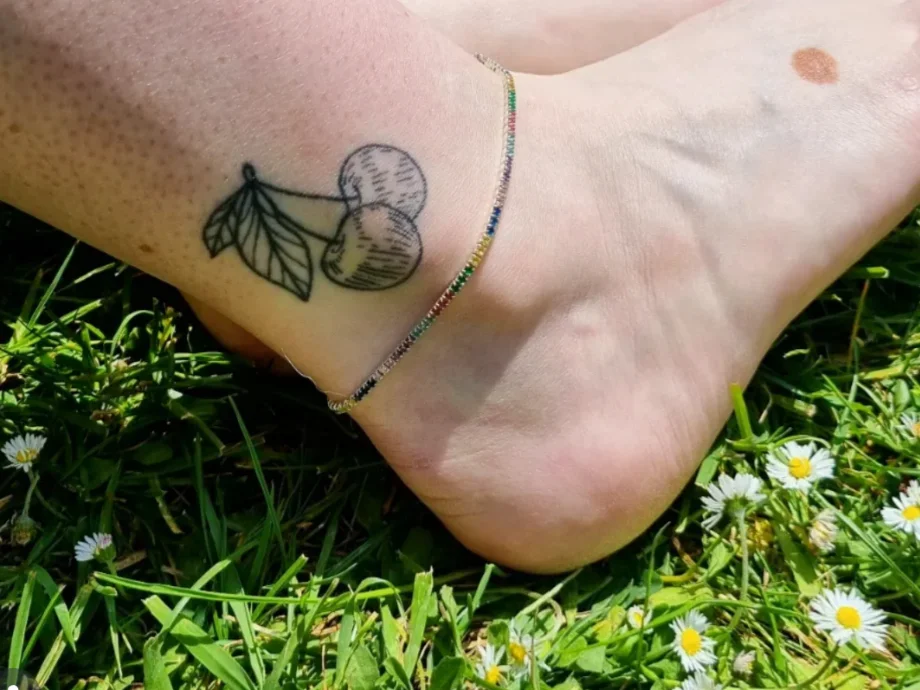
Finally, ADHD brains LOVE novelty. A few years ago, I got five tattoos (the first of which, the sweet little stick-and-poke cherries, is in the main image) and four new piercings just because I got a bit hooked on the novelty (and, truthfully, the discomfort. That’s ADHD sensation seeking behaviour in action!). I hate doing the same thing day in, day out, so copywriting (and especially freelance copywriting) is a great way to get my hit of newness. I really love getting to know a new client, understanding their market, their audience and their voice and weaving brand-new magic out of thin air. It’s the best dopamine hit, and it’s what’s kept me in one career for so long. So what I’m saying is that if you choose to work with me, you’re actively contributing to my happiness, not just my bank balance!
So if you’ve seen my social posts talking about ADHD, I hope it doesn’t put you off. It may not be a superpower, but it’s certainly part of what makes me a great copywriter. Just please don’t look at my chaotic Google Drive ‘filing system’. I know where everything lives, but I can’t even pretend there’s a method to that particular madness.